Dental Emergency? Same-day appointments available. Call now: Cary Dental Arts: (919) 297-2701 | Wake Dental Arts: (919) 297-8858

Unique to You ยท Oral Conditions

Tooth Decay

Tooth Decay explained in clear patient-friendly language, including what to notice, what a dentist may review, and questions to ask.

Oral Conditions
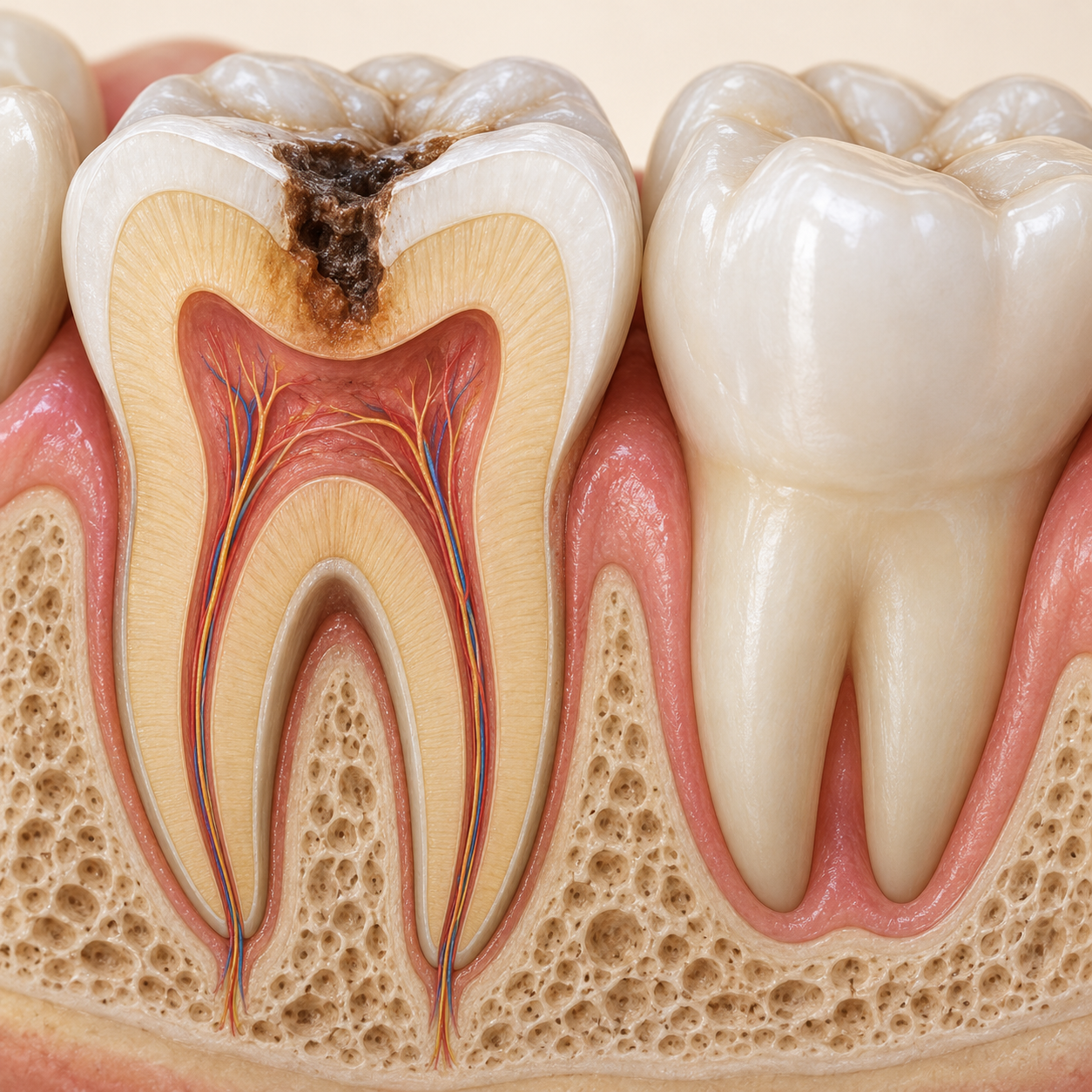
Cavities develop when bacterial acids repeatedly remove minerals from enamel and dentin.

Clinical illustration of tooth decay

Evidence-based guidance

Practical steps for tooth decay.

Overview

Tooth decay is a disease process in which acids produced by plaque bacteria remove minerals from a tooth. Early damage may be stopped or reversed, but once tooth structure collapses into a cavity it generally requires restorative treatment.

Causes

  • Tooth decay develops when plaque bacteria use sugars and starches to produce acids that repeatedly remove minerals from enamel or exposed roots.
  • Early mineral loss can progress into a cavity when acid attacks outpace repair by saliva and fluoride.

Contributing Factors

  • Frequent sugary drinks or snacks, low fluoride exposure, dry mouth, deep grooves, exposed roots, and plaque-retentive appliances increase risk.
  • Past cavities are an important predictor; medicines, reflux, disability, and access to care can also affect risk.

Symptoms

  • Early decay may have no symptoms or appear as a white, brown, or dark spot.
  • As damage progresses, sensitivity, food trapping, a visible hole, biting pain, spontaneous toothache, swelling, or infection may develop.

Diagnosis

  • The dentist combines visual and tactile examination with history and risk assessment.
  • Dental X-rays can reveal decay between teeth or beneath restorations that is not visible directly.

Prevention

  • Brush twice daily with fluoride toothpaste, clean between teeth, limit the frequency of added sugars, drink fluoridated water when available, and obtain risk-based dental care.
  • Fluoride varnish, prescription fluoride, and sealants may provide added protection for selected patients.

Treatment

  • Very early noncavitated areas may be managed with fluoride, improved plaque control, diet changes, and monitoring.
  • A cavity may require a filling or crown; deeper disease may require root canal treatment or extraction if the tooth cannot be restored.

Explore care

Related Dental Arts services

Next action

Book, call, or route this visit to the right location.