Dental Emergency? Same-day appointments available. Call now: Cary Dental Arts: (919) 297-2701 | Wake Dental Arts: (919) 297-8858

Unique to You ยท Oral Conditions

Tooth Loss

Tooth Loss explained in clear patient-friendly language, including what to notice, what a dentist may review, and questions to ask.

Oral Conditions
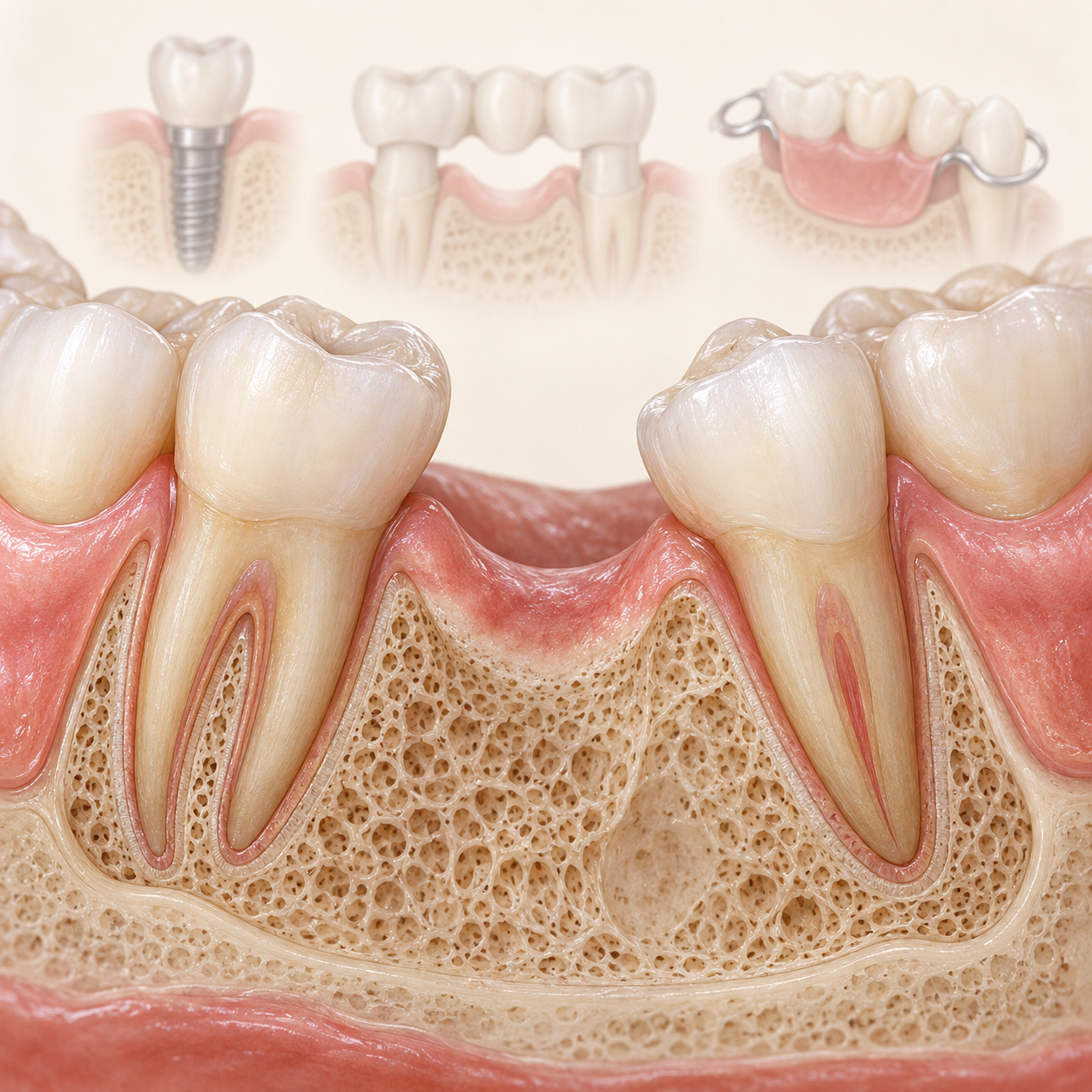
Missing teeth may affect chewing, speech, tooth position, bone, and confidence; replacement needs are individual.

Clinical illustration of tooth loss

Evidence-based guidance

Practical steps for tooth loss.

Overview

Tooth loss can follow decay, gum disease, fracture, infection, trauma, or a planned extraction. Its effects depend on which teeth are missing and may include changes in chewing, speech, tooth position, bone, appearance, and quality of life.

Causes

  • The most common disease-related causes are advanced tooth decay and periodontal disease; trauma, fracture, infection, and developmental conditions can also lead to loss.
  • Some teeth are removed because they cannot be predictably restored or threaten surrounding health.

Contributing Factors

  • Tobacco, diabetes, dry mouth, limited fluoride exposure, irregular care, and difficulty performing daily hygiene can increase disease risk.
  • Grinding, unsafe sports participation, and delaying treatment can make damaged teeth harder to save.

Symptoms

  • Before loss, a tooth may become painful, loose, fractured, infected, or increasingly difficult to chew with.
  • After loss, people may notice food trapping, altered speech or chewing, tooth movement, bite changes, or reduced confidence.

Diagnosis

  • The dentist evaluates the remaining tooth structure, gums, bone, bite, neighboring teeth, health history, and goals.
  • Imaging helps determine whether a tooth can be saved and whether bone and anatomy support replacement options.

Prevention

  • Prevent decay and gum disease with fluoride brushing, interdental cleaning, tobacco avoidance, risk-based visits, and management of dry mouth and diabetes.
  • Use a sports mouthguard and seek early care for loose, painful, or fractured teeth.

Treatment

  • When possible, treatment first considers whether the natural tooth can be retained predictably.
  • Replacement choices may include an implant, fixed bridge, removable partial denture, or complete denture; in selected spaces, monitoring may be reasonable after reviewing function and tooth movement.

Explore care

Related Dental Arts services

Next action

Book, call, or route this visit to the right location.