Dental Emergency? Same-day appointments available. Call now: Cary Dental Arts: (919) 297-2701 | Wake Dental Arts: (919) 297-8858

Unique to You ยท Oral Conditions

Periodontal Disease

Periodontal Disease explained in clear patient-friendly language, including what to notice, what a dentist may review, and questions to ask.

Oral Conditions

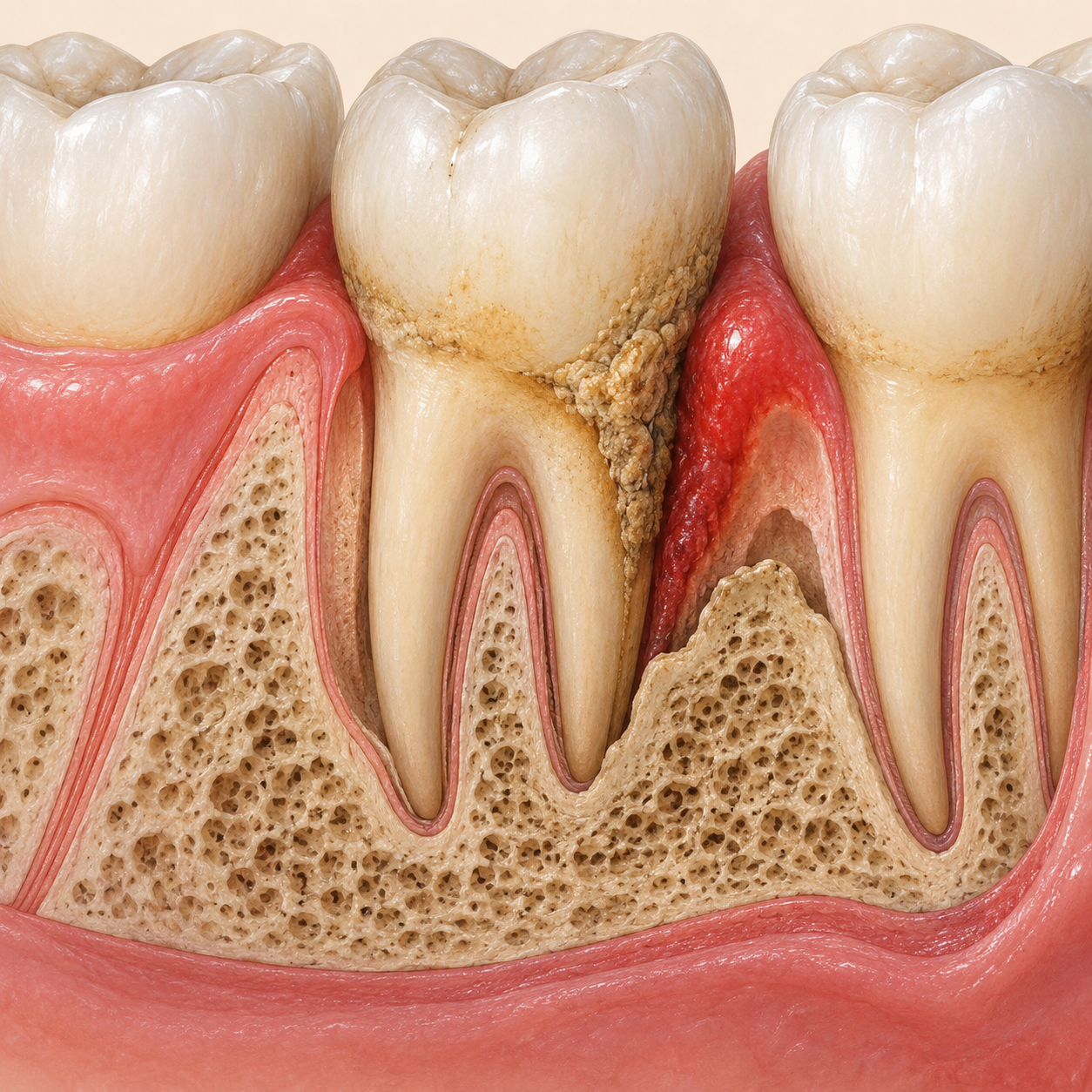
Advanced gum infection can damage the bone and attachment supporting teeth, sometimes with little pain.

Clinical illustration of periodontal disease

Evidence-based guidance

Practical steps for periodontal disease.

Overview

Periodontal disease, or periodontitis, is a chronic inflammatory infection that damages the gum attachment and bone supporting the teeth. Unlike gingivitis, established bone loss is not reversible, but treatment and ongoing maintenance can slow or control progression.

Causes

  • Periodontitis develops when plaque-related inflammation extends below the gumline and damages the ligament and bone supporting teeth.
  • Tartar and deep periodontal pockets make bacterial deposits harder to remove with home care alone.

Contributing Factors

  • Tobacco use, diabetes, family susceptibility, inconsistent cleaning, and irregular professional care increase risk or severity.
  • Age, stress, immune conditions, dry mouth, and some medicines can also influence progression or treatment response.

Symptoms

  • Signs may include bleeding or receding gums, persistent bad breath, pus, sensitive or loose teeth, new spaces, bite changes, or pain with chewing.
  • Significant bone loss can develop with little pain, so symptoms alone do not show disease severity.

Diagnosis

  • The dental team measures periodontal pockets and recession, checks bleeding, mobility and bite, and reviews dental X-rays for bone loss.
  • Findings are used to determine stage, progression risk, and whether specialist care is appropriate.

Prevention

  • Brush and clean between teeth effectively, avoid tobacco, manage diabetes with the medical team, and keep individualized examination and cleaning visits.
  • Gingivitis should be addressed before deeper supporting tissues are damaged.

Treatment

  • Treatment may include oral-hygiene coaching, scaling and root planing, risk-factor control, medication in selected cases, or periodontal surgery.
  • Ongoing periodontal maintenance is essential because lost support does not simply grow back and the disease can recur.

Explore care

Related Dental Arts services

Next action

Book, call, or route this visit to the right location.