Dental Emergency? Same-day appointments available. Call now: Cary Dental Arts: (919) 297-2701 | Wake Dental Arts: (919) 297-8858

Unique to You ยท Oral Conditions

Oral Cancer

Oral Cancer explained in clear patient-friendly language, including what to notice, what a dentist may review, and questions to ask.

Oral Conditions

A persistent sore, lump, color change, unexplained bleeding, or swallowing difficulty deserves prompt professional assessment.

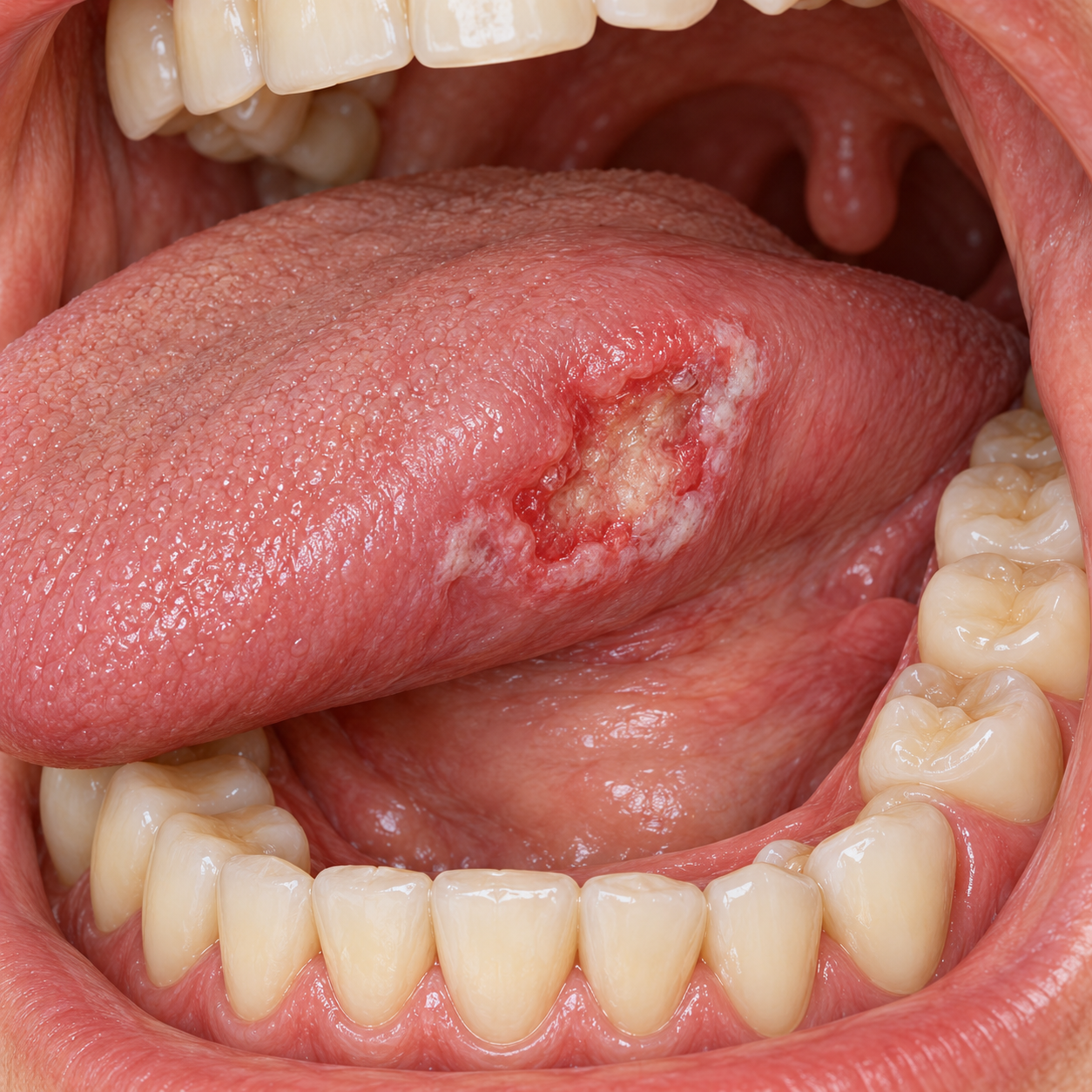
Clinical illustration of oral cancer

Evidence-based guidance

Practical steps for oral cancer.

Overview

Oral cancer can develop on the lips, tongue, gums, cheeks, floor or roof of the mouth, and nearby throat. Early changes may be painless, so any sore, lump, patch, or functional change that persists for more than two weeks should be evaluated.

Causes

  • Oral and throat cancers develop when abnormal cells grow without normal control; no single cause explains every case.
  • Tobacco exposure, heavy alcohol use, and infection with certain types of human papillomavirus are important causes or risk drivers.

Contributing Factors

  • Risk rises with combined tobacco and alcohol exposure and generally increases with age.
  • Sun exposure contributes to lip cancer risk; oral cancer can still occur in people without recognized risk factors.

Symptoms

  • Warning signs include a sore lasting more than two weeks, a lump or thickening, red or white patch, unexplained bleeding, numbness, persistent hoarseness, or difficulty chewing or swallowing.
  • A neck lump, ear pain, altered denture fit, or unexplained weight loss also deserves evaluation.

Diagnosis

  • A dentist or medical clinician examines the lips, mouth, tongue, throat, and neck and reviews symptom duration and risk history.
  • A persistent or suspicious area requires referral and biopsy; imaging helps determine extent after a diagnosis.

Prevention

  • Do not use tobacco, limit alcohol, use lip sun protection, and discuss HPV vaccination with an appropriate medical clinician.
  • Attend routine dental visits and report persistent changes rather than waiting for pain.

Treatment

  • Treatment is planned by a cancer team and may include surgery, radiation therapy, medicines, or a combination depending on site and stage.
  • Dental care before, during, and after cancer treatment helps manage infection, dry mouth, nutrition, jaw function, and long-term complications.

Explore care

Related Dental Arts services

Next action

Book, call, or route this visit to the right location.