Dental Emergency? Same-day appointments available. Call now: Cary Dental Arts: (919) 297-2701 | Wake Dental Arts: (919) 297-8858

Unique to You ยท Oral Conditions

Grinding or Clenching

Grinding or Clenching explained in clear patient-friendly language, including what to notice, what a dentist may review, and questions to ask.

Oral Conditions

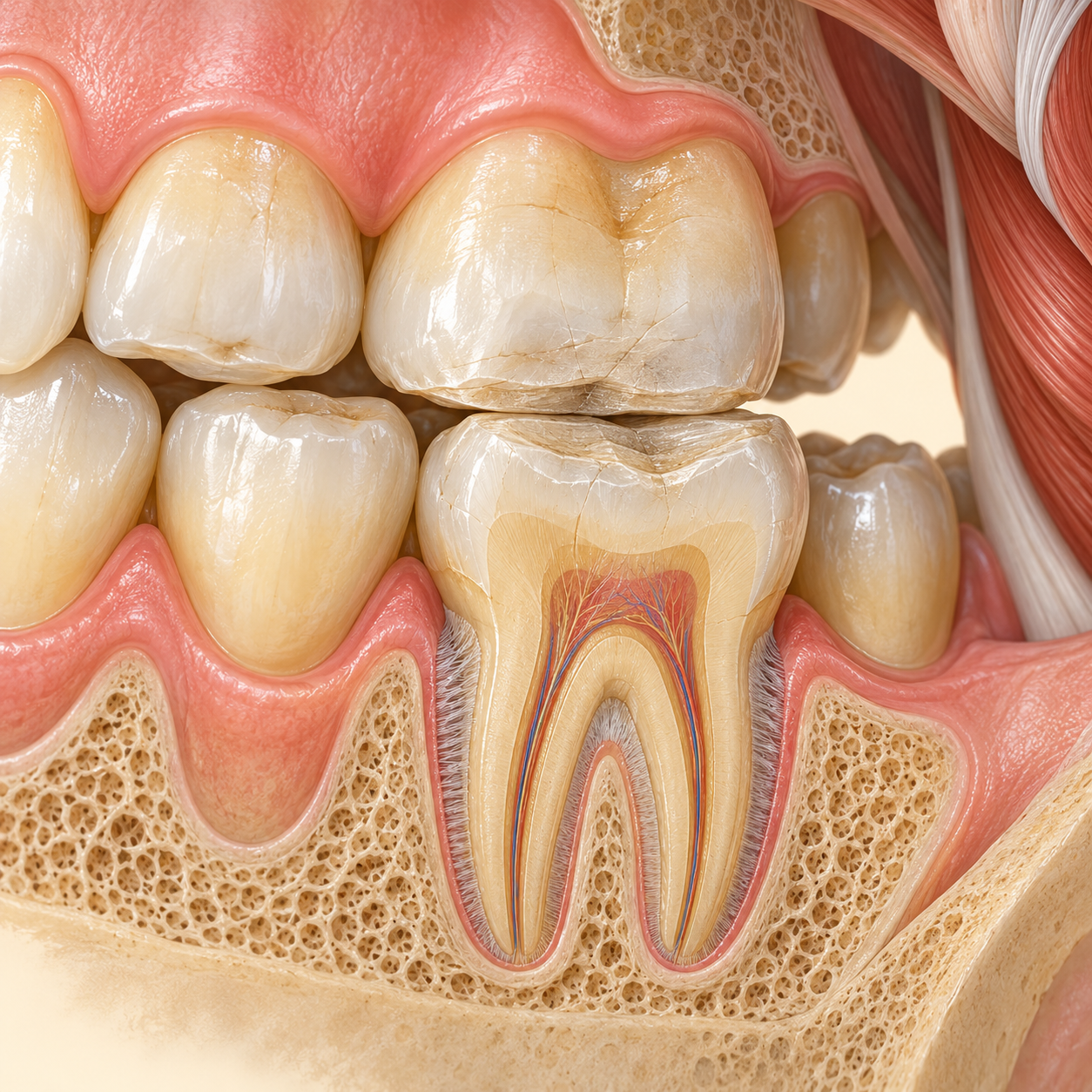
Repeated bite forces can contribute to worn enamel, cracks, muscle fatigue, headaches, and jaw soreness.

Clinical illustration of grinding or clenching

Evidence-based guidance

Practical steps for grinding or clenching.

Overview

Grinding or clenching, also called bruxism, places repeated pressure on the teeth, jaw joints, and chewing muscles. It may happen during sleep or while awake, and people are not always aware of it until wear, fractures, headaches, or jaw discomfort develop.

Causes

  • Bruxism is repeated clenching, grinding, or bracing of the jaw while awake or asleep; its cause may involve several biological and behavioral factors.
  • Sleep-related bruxism is considered a sleep-related movement activity rather than simply a habit.

Contributing Factors

  • Stress, concentration habits, sleep disruption, smoking, alcohol, caffeine, and some medicines may increase risk for some people.
  • Sleep apnea and other sleep disorders can coexist with nighttime grinding and deserve medical evaluation when suspected.

Symptoms

  • Possible signs include flattened or chipped teeth, sensitivity, tired jaw muscles, morning jaw soreness, temple headaches, and indentations along the tongue or cheeks.
  • A sleep partner may notice grinding sounds, although bruxism can also occur silently.

Diagnosis

  • The dentist reviews symptoms, sleep and medication history, tooth wear, fractures, muscle tenderness, jaw movement, and bite contacts.
  • Referral for a sleep evaluation may be appropriate when snoring, witnessed breathing pauses, or marked daytime sleepiness is present.

Prevention

  • Reduce daytime jaw bracing by keeping teeth apart when not eating, and address sleep, stress, caffeine, alcohol, or tobacco patterns that may contribute.
  • Protect teeth during sports and keep restorations and bite changes under regular review.

Treatment

  • Care may include behavior awareness, physical therapy, management of contributing sleep or health conditions, and a custom oral appliance to protect teeth.
  • An appliance limits damage but may not stop the underlying muscle activity, so follow-up is important.

Explore care

Related Dental Arts services

Next action

Book, call, or route this visit to the right location.