Dental Emergency? Same-day appointments available. Call now: Cary Dental Arts: (919) 297-2701 | Wake Dental Arts: (919) 297-8858

Unique to You ยท Oral Conditions

Cracked Tooth

Cracked Tooth explained in clear patient-friendly language, including what to notice, what a dentist may review, and questions to ask.

Oral Conditions

Cracks vary in depth and direction; pain with biting or temperature can be an important warning sign.

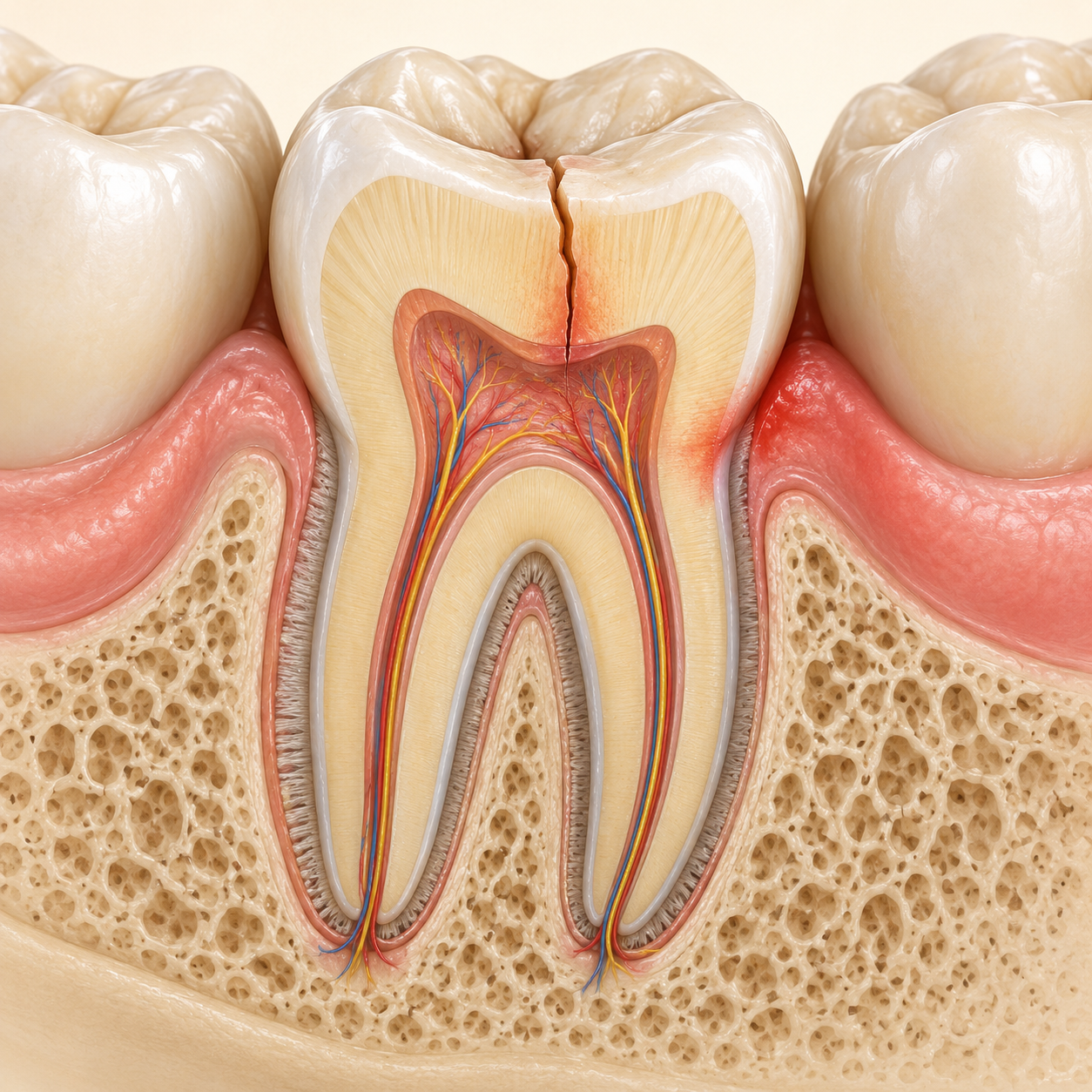
Clinical illustration of cracked tooth

Evidence-based guidance

Practical steps for cracked tooth.

Overview

A cracked tooth has a fracture line that may involve enamel, dentin, the pulp, or the root. The location and depth determine whether the tooth can be protected and restored, and early assessment matters because cracks do not heal on their own.

Causes

  • Cracks can result from injury, repeated heavy biting forces, grinding or clenching, or gradual wear.
  • A tooth weakened by decay, a large restoration, or loss of supporting structure may crack under normal chewing pressure.

Contributing Factors

  • Chewing ice or hard kernels, contact sports without protection, temperature extremes, and long-term bite overload increase risk.
  • Cracks vary from shallow enamel craze lines to fractures extending into the root.

Symptoms

  • Pain may be intermittent and occur while biting or when releasing the bite.
  • Cold or heat sensitivity, spontaneous pain, gum swelling, or a localized pimple on the gum may occur when the pulp or surrounding tissues are affected.

Diagnosis

  • Diagnosis may involve magnification, bite tests, cold testing, probing around the tooth, transillumination, removal of a restoration, and dental imaging.
  • Some cracks are difficult to see, and their full depth may not be known until treatment begins.

Prevention

  • Avoid chewing hard objects, wear a sports mouthguard, and seek help for grinding or clenching.
  • Promptly repair decay and failing restorations and report new biting pain before a crack progresses.

Treatment

  • Treatment depends on the type, location, and depth and may include bonding, a crown, root canal treatment, periodontal or endodontic surgery, or extraction.
  • A crack does not heal like a broken bone; early stabilization can improve the chance of keeping the tooth but cannot guarantee it.

Explore care

Related Dental Arts services

Next action

Book, call, or route this visit to the right location.