Dental Emergency? Same-day appointments available. Call now: Cary Dental Arts: (919) 297-2701 | Wake Dental Arts: (919) 297-8858

Unique to You · Oral Conditions

Chipped Tooth

Chipped Tooth explained in clear patient-friendly language, including what to notice, what a dentist may review, and questions to ask.

Oral Conditions

A chip may be cosmetic or may expose deeper tooth layers, create a sharp edge, or signal a larger fracture.

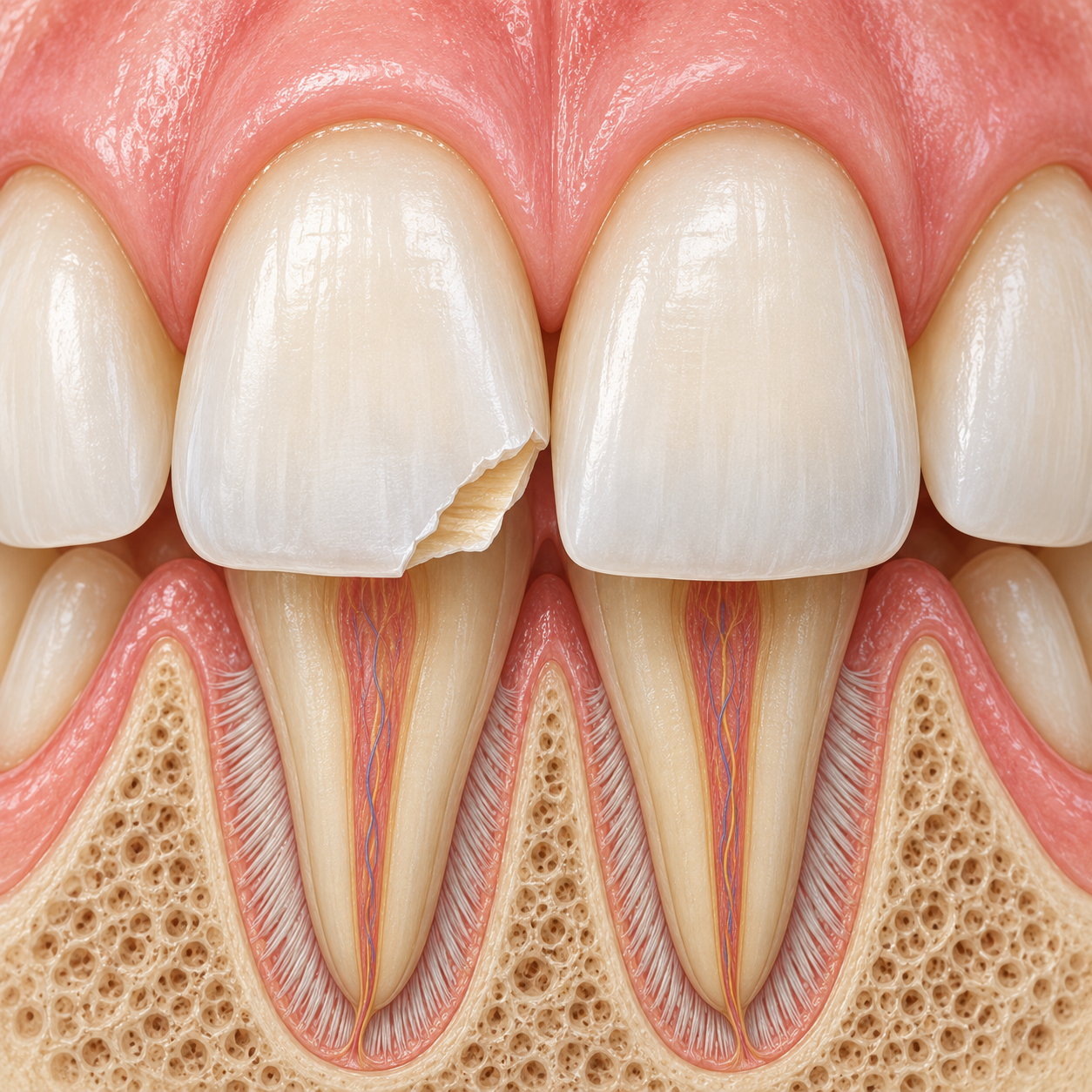
Clinical illustration of chipped tooth

Evidence-based guidance

Practical steps for chipped tooth.

Overview

A chipped tooth is a loss of enamel or deeper tooth structure. Some chips affect appearance or create a rough edge, while deeper injuries can expose sensitive layers, involve the tooth’s nerve, or accompany a crack that needs prompt evaluation.

Causes

  • A tooth may chip after a fall, sports injury, biting a hard object, or using teeth as tools.
  • Decay, acid erosion, large restorations, and long-term wear can weaken tooth structure so it breaks under ordinary force.

Contributing Factors

  • Grinding or clenching, an uneven bite, brittle enamel, and repeated chewing on ice or hard kernels increase stress on teeth.
  • The size and location of existing fillings and previous root canal treatment can affect fracture risk.

Symptoms

  • A chip may cause a rough or sharp edge, visible loss of tooth structure, tongue irritation, temperature sensitivity, or pain when biting.
  • A deeper break may expose yellow dentin or red or pink pulp tissue and may be accompanied by bleeding or swelling.

Diagnosis

  • The dentist examines the missing area, bite, mobility, nearby teeth, gums, and soft tissues.
  • Photographs, dental X-rays, light transmission, cold testing, or bite testing may be used to determine whether damage extends beyond the visible chip.

Prevention

  • Avoid chewing ice and hard objects, do not use teeth to open packages, and wear a properly fitted sports mouthguard.
  • Managing decay, acid exposure, and grinding or clenching can reduce the chance of another break.

Treatment

  • A very small chip may need smoothing; other chips may be restored with bonding, a filling, reattachment of a saved fragment, a veneer, or a crown.
  • Pulp injury may require root canal treatment, while a tooth that cannot be restored may require removal and replacement planning.

Explore care

Related Dental Arts services

Next action

Book, call, or route this visit to the right location.