Dental Emergency? Same-day appointments available. Call now: Cary Dental Arts: (919) 297-2701 | Wake Dental Arts: (919) 297-8858

Technology

CBCT 3D Imaging

CBCT 3D Imaging at Dental Arts with patient education, related services, clinical benefits, and modern dental technology images.

Dental technology

Carestream CBCT 3D imaging for safer diagnosis and planning

Carestream CBCT imaging supports evaluation of bone, roots, airway, sinus anatomy, wisdom teeth, implant sites, and complex dental infections with more context than flat imaging alone.

Implant planningRoot canal diagnosisAirway analysisOral surgery planning
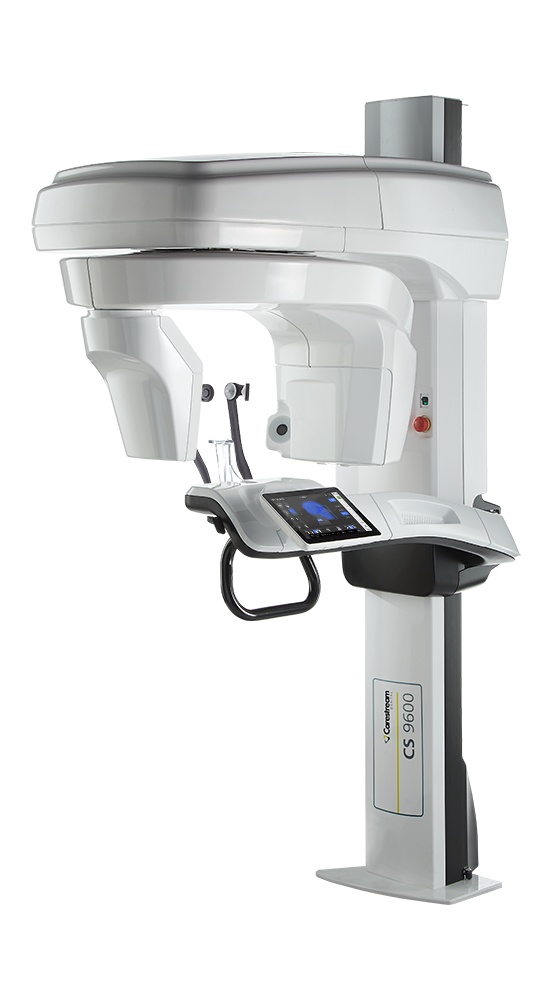
CBCT 3D Imaging technology image
CBCT 3D Imaging supports modern diagnosis, treatment planning, and patient education.

Where patients see it

Applied across related services.

These cropped examples connect the technology to actual service workflows, so patients understand why the tool matters.

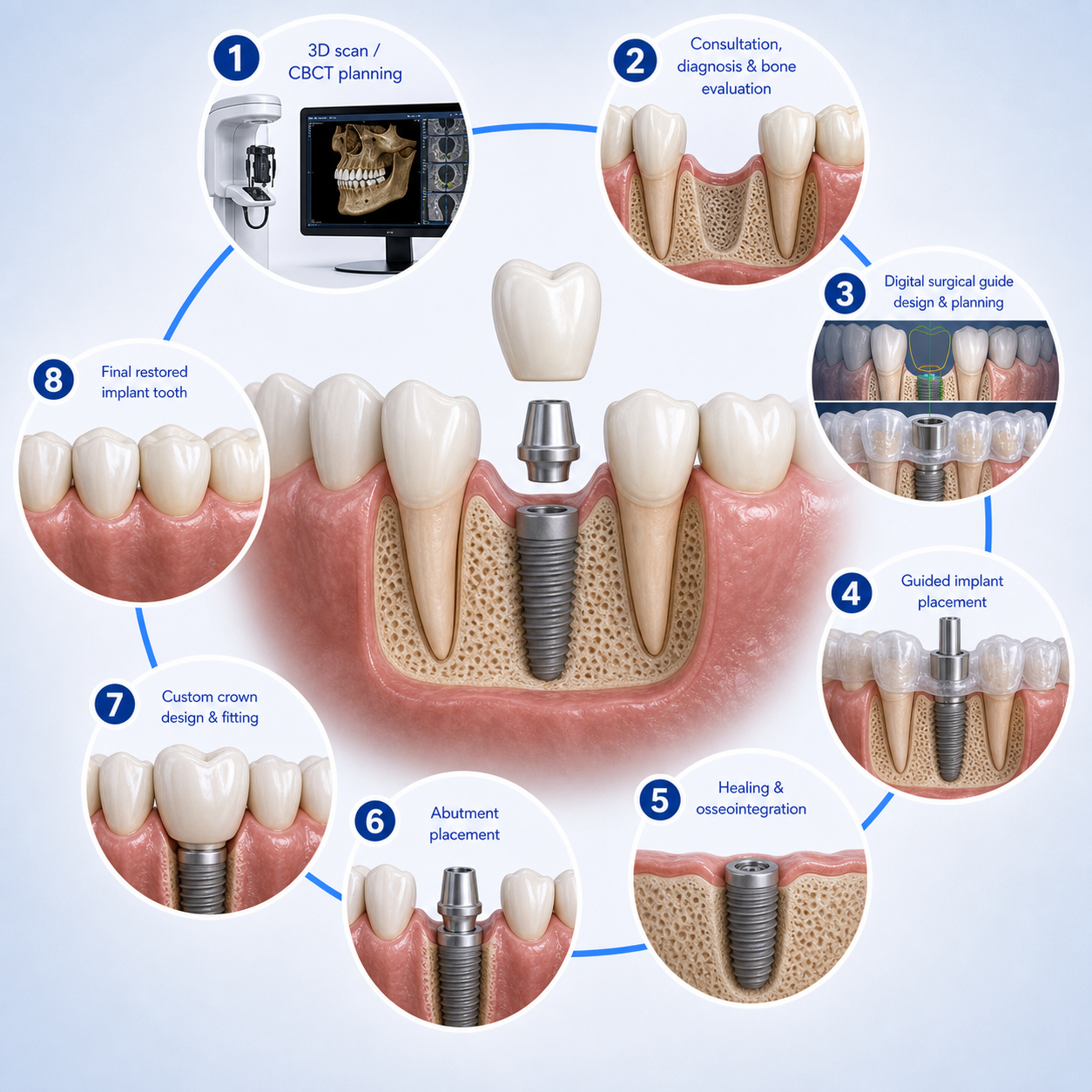
Eight illustrated stages: 3D scan and CBCT planning; Consultation, diagnosis, and bone evaluation; Digital implant planning and surgical guide design when appropriate; Implant placement using the planned approach; Healing and integration with the jawbone; Abutment placement; Custom crown design and fitting; Final restored tooth and ongoing maintenance
Dental Implants 3D: Step by Step
  1. 3D scan and CBCT planning
  2. Consultation, diagnosis, and bone evaluation
  3. Digital implant planning and surgical guide design when appropriate
  4. Implant placement using the planned approach
  5. Healing and integration with the jawbone
  6. Abutment placement
  7. Custom crown design and fitting
  8. Final restored tooth and ongoing maintenance

CBCT provides a 3D view of jawbone, nearby nerves, and sinus anatomy to help plan implant size and position. An intraoral scan records the teeth and bite for restoration planning. Grafting, guided placement, and the timing of each stage depend on your individual needs.

Explore dental implant care · Learn about CBCT 3D imaging
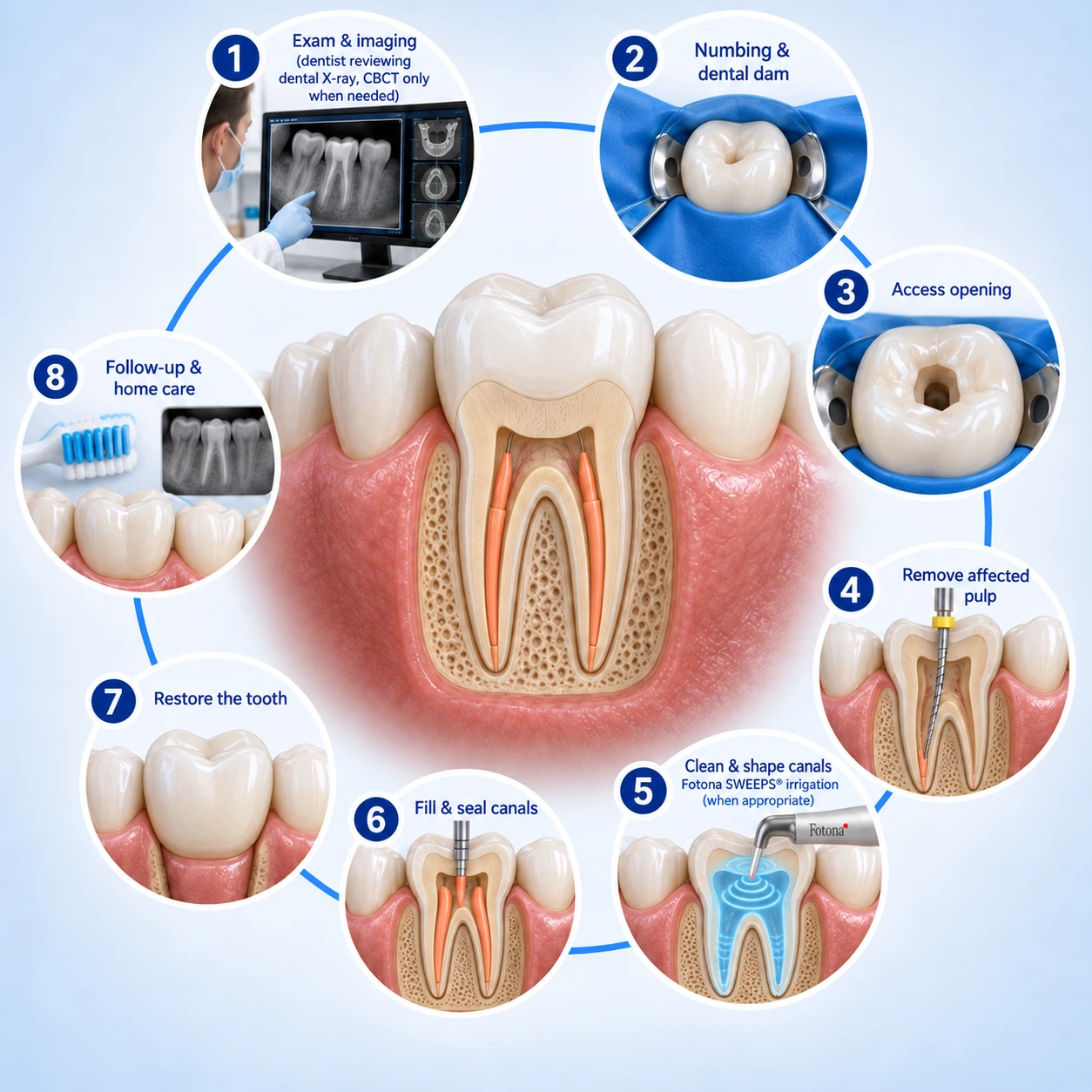
Eight illustrated stages of root canal treatment, from examination to restoration and follow-up
Root Canals: Step by Step
  1. Exam and imaging; CBCT for selected complex cases
  2. Numbing and dental dam
  3. Access opening
  4. Remove affected pulp
  5. Clean and shape canals; Fotona SWEEPS-assisted irrigation when appropriate
  6. Fill and seal canals
  7. Restore the tooth
  8. Follow-up and home care

When appropriate, Fotona SWEEPS activates the cleaning solution with laser-generated pressure waves to support irrigation after canal shaping. It complements standard preparation and irrigation.

The number of visits and final restoration depend on your tooth and treatment plan.

Explore root canal care · AAE treatment guide · About Fotona SWEEPS
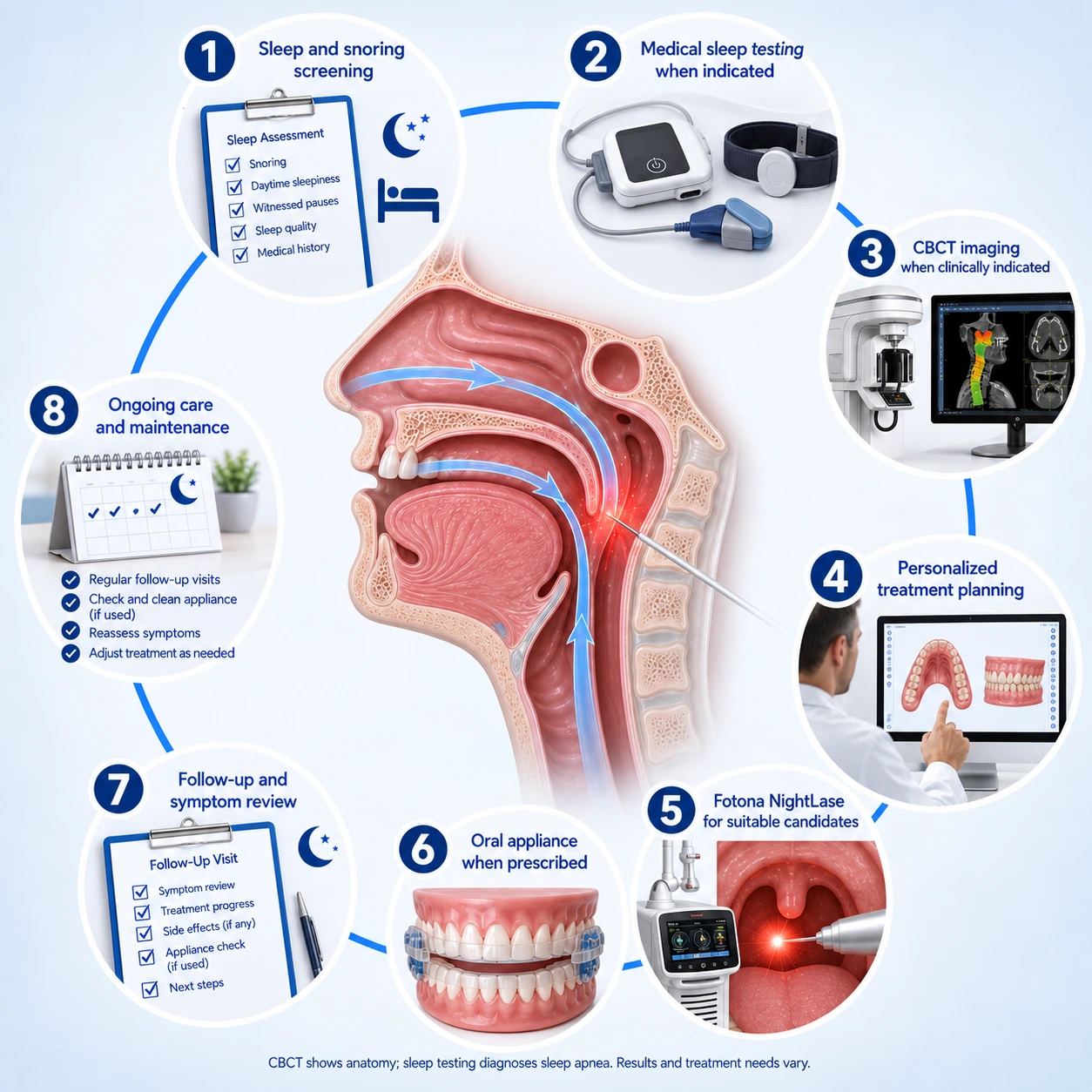
Eight illustrated stages: Sleep and snoring screening; Medical sleep testing when indicated; CBCT imaging when clinically indicated; Personalized treatment planning with your sleep-care team; Fotona NightLase for suitable snoring-treatment candidates; Custom oral appliance when prescribed; Follow-up and symptom review; sleep testing when recommended; Ongoing care and maintenance
Sleep Care & NightLase: Step by Step
  1. Sleep and snoring screening
  2. Medical sleep testing when indicated
  3. CBCT imaging when clinically indicated
  4. Personalized treatment planning with your sleep-care team
  5. Fotona NightLase for suitable snoring-treatment candidates
  6. Custom oral appliance when prescribed
  7. Follow-up and symptom review; sleep testing when recommended
  8. Ongoing care and maintenance

When clinically indicated, CBCT helps the dentist review 3D jaw and airway anatomy. It does not diagnose sleep apnea or replace a sleep study. NightLase gently warms selected oral soft tissues for suitable snoring-treatment candidates. Your plan may include a series of visits; results and maintenance needs vary. Continue prescribed sleep apnea treatment unless your sleep physician recommends a change.

Explore sleep dentistry · Learn about CBCT 3D imaging · About Fotona NightLase · Sleep apnea diagnosis

Why It Matters

  • Implant planning
  • Root canal diagnosis
  • Airway analysis
  • Oral surgery planning

Technology is used when it improves diagnosis, planning, patient education, comfort, or follow-up care.

Next action

Book, call, or route this visit to the right location.