Dental Emergency? Same-day appointments available. Call now: Cary Dental Arts: (919) 297-2701 | Wake Dental Arts: (919) 297-8858

Unique to You ยท Oral Conditions

Mouth Sores and Ulcers

Mouth Sores and Ulcers explained in clear patient-friendly language, including what to notice, what a dentist may review, and questions to ask.

Oral Conditions
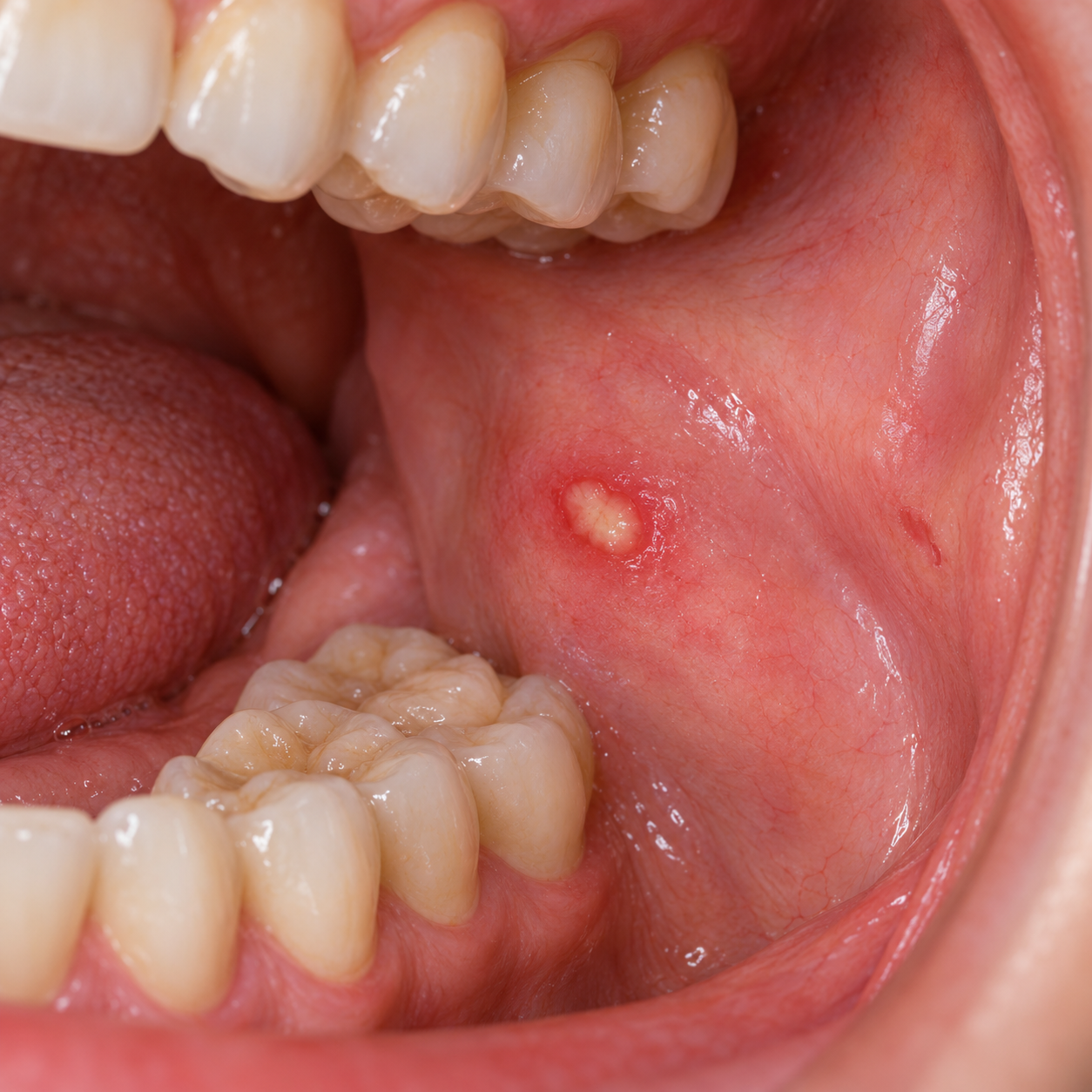
Most mouth sores heal promptly, but their location, appearance, recurrence, and duration help distinguish irritation, canker sores, infection, and concerning lesions.

Clinical illustration of mouth sores and ulcers

Evidence-based guidance

Practical steps for mouth sores and ulcers.

Overview

Mouth sores include traumatic ulcers, canker sores, cold sores, infections, inflammatory conditions, and less common precancerous or cancerous changes. Appearance, location, recurrence, and healing time help distinguish them.

Causes

  • Sores may follow cheek biting, burns, sharp teeth, braces, dentures, or other local irritation.
  • Canker sores have no single known cause, while cold sores are caused by herpes simplex virus and are contagious.

Contributing Factors

  • Stress, tissue injury, nutritional deficiency, immune conditions, gastrointestinal disease, medicines, and tobacco may influence certain lesions.
  • A persistent sore can also represent dysplasia or oral cancer even when it is painless.

Symptoms

  • Canker sores are usually round painful ulcers inside the mouth; cold sores commonly form clustered blisters on or near the lips.
  • Seek assessment for a sore lasting more than two weeks, a hard border, unexplained bleeding, a lump, numbness, or difficulty swallowing.

Diagnosis

  • The clinician examines location, color, surface, firmness, nearby teeth or appliances, lymph nodes, and recurrence history.
  • Persistent, unusual, severe, or recurrent lesions may require laboratory testing, blood tests, specialist referral, or biopsy.

Prevention

  • Avoid recognized triggers and local trauma, keep appliances smooth and clean, and do not use tobacco.
  • During an active cold sore, avoid kissing, sharing utensils, and touching the lesion and then the eyes.

Treatment

  • Minor traumatic or canker sores often heal in one to two weeks; protective products, topical pain relief, or prescription rinses may help.
  • Antiviral medicine may shorten selected cold-sore outbreaks, while treatment of persistent lesions depends on the diagnosis.

Explore care

Related Dental Arts services

Next action

Book, call, or route this visit to the right location.