Dental Emergency? Same-day appointments available. Call now: Cary Dental Arts: (919) 297-2701 | Wake Dental Arts: (919) 297-8858

Unique to You ยท Oral Conditions

Enamel Erosion and Tooth Wear

Enamel Erosion and Tooth Wear explained in clear patient-friendly language, including what to notice, what a dentist may review, and questions to ask.

Oral Conditions

Chemical acid exposure and mechanical forces can permanently remove tooth structure and change comfort, shape, color, and function.

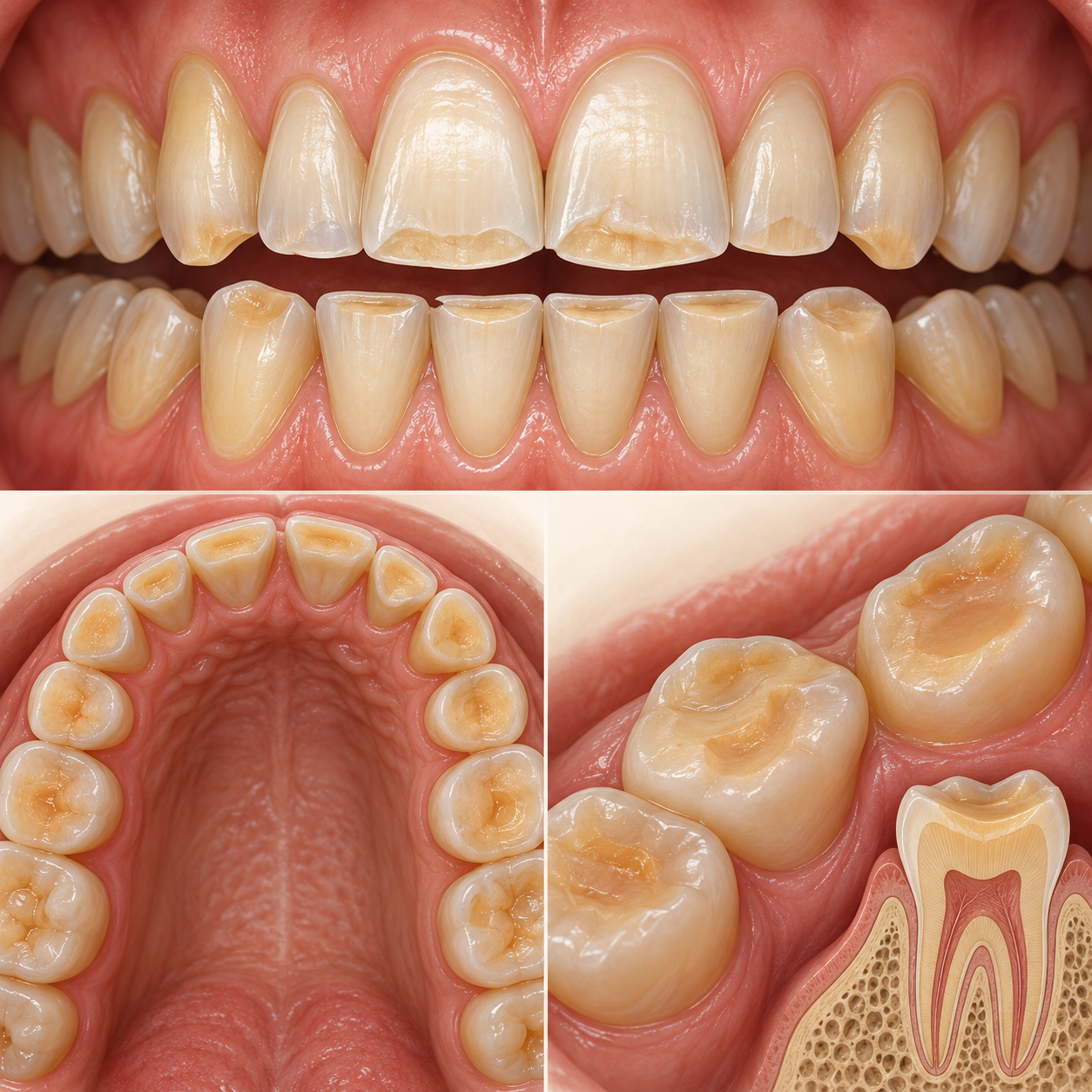
Clinical illustration of enamel erosion and tooth wear

Evidence-based guidance

Practical steps for enamel erosion and tooth wear.

Overview

Tooth wear is the gradual loss of enamel and sometimes dentin from chemical erosion, grinding, friction, or a combination of forces. Lost enamel does not grow back, but identifying the pattern early can reduce progression and guide conservative care.

Causes

  • Erosion is chemical wear from dietary acids, reflux, or repeated vomiting rather than bacterial cavity acids.
  • Grinding, clenching, abrasive habits, and tooth-to-tooth or object-to-tooth friction can add mechanical wear.

Contributing Factors

  • Frequent soda, sports drinks, citrus, sour candy, reflux, eating disorders, dry mouth, and some occupational exposures increase risk.
  • Hard brushing or abrasive products can worsen wear where enamel or roots are already vulnerable.

Symptoms

  • Teeth may become sensitive, yellow, smooth, cupped, shortened, thin-edged, chipped, or increasingly translucent.
  • Fillings may appear raised as surrounding tooth structure wears away, and the bite may gradually change.

Diagnosis

  • The dentist evaluates the wear pattern, diet, reflux, medicines, habits, saliva, bite, and previous photographs or models.
  • Imaging and serial scans or photographs can help determine activity and rate of progression.

Prevention

  • Reduce the frequency of acidic exposure, use water as the routine drink, and address reflux or repeated vomiting medically.
  • Avoid brushing immediately after a strong acid exposure; use gentle fluoride-based care and manage grinding when present.

Treatment

  • Early care focuses on controlling causes, fluoride, desensitizing products, and monitoring.
  • Moderate or advanced wear may require bonding, fillings, onlays, crowns, bite rehabilitation, or coordinated medical care.

Explore care

Related Dental Arts services

Next action

Book, call, or route this visit to the right location.